
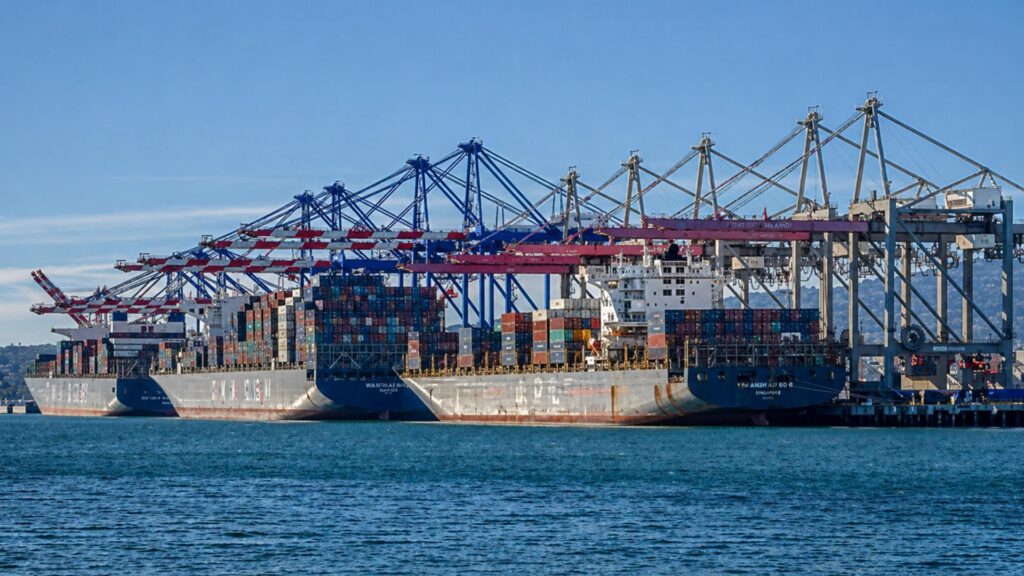
If you are booking a China to USA ocean freight transit time for a December departure, the first thing to accept is that the baseline sailing number is only part of the picture. December sits at the tail end of the peak season: vessel space has been tightening for months, origin terminals are crowded, and the published port-to-port transit rarely tells the full story once port dwell, consolidation and destination processing are added.
This guide works through the realistic December sailing windows, what slows the cargo down, and which shipments a December departure can still serve.
December port-to-port baseline
The ocean leg follows the same routing ranges as quieter months, but December conditions make the fastest end of those ranges harder to reach. On West Coast sailings to Los Angeles/Long Beach or Oakland, FCL typically runs about 13–21 days port to port, with the fastest direct services around 10–13 days from the major southern China ports; LCL adds consolidation and deconsolidation at both ends, pushing West Coast LCL to roughly 20–30 days. East Coast routing to NY/NJ or Savannah moves through the Panama Canal: FCL about 25–35 days and LCL about 32–45 days, roughly 10–15 days more than the West Coast.
| Roteamento | FCL de porto a porto | LCL de porto a porto | December note |
|---|---|---|---|
| Costa Oeste (Los Angeles/Long Beach, Oakland) | 13–21 dias | 20–30 dias | Shortest ocean leg; congestion can stretch both ends |
| Costa Leste (Nova Iorque/Nova Jérsia, Savannah) | 25–35 dias | 32–45 dias | Panama Canal routing; adds about 10–15 days |
| LCL adjustment | — | Adds about 3–7 days | Consolidation and deconsolidation on both sides |
These are planning ranges, not a promise for the specific week. Sailing schedules, vessel rotations and terminal conditions shift week to week, so confirm the current schedule with your forwarder for the sailing week you are booking.
What December adds to the schedule
Three December-specific effects sit on top of the ocean leg.
First, origin terminals and consolidation warehouses fill earlier because most importers have already pulled forward holiday stock; an LCL booking that misses the origin cut-off rolls to the next consolidation, which can be several sailings out in a tight week.
Second, destination gateways can back up when several vessels arrive in the same week, delaying berthing, unpacking and the truck appointments after release.
Third, carriers occasionally skip or combine calls on crowded lanes, and a skipped port adds days the port-to-port estimate never showed.
FCL usually absorbs these delays better than LCL. A full container moves through the terminal on its own booking, while LCL depends on a shared container filling enough volume to release, then on deconsolidation at the other end. When terminals are busy, those consolidation and deconsolidation windows widen by several days, and a plan that looked comfortable on a quiet week can slip past its buffer in December. If you are choosing between the two, the volume break-even around 15 CBM is a reasonable starting point; request both quotes for your lane rather than assuming one mode is always cheaper.
Why Christmas arrival is usually off the table
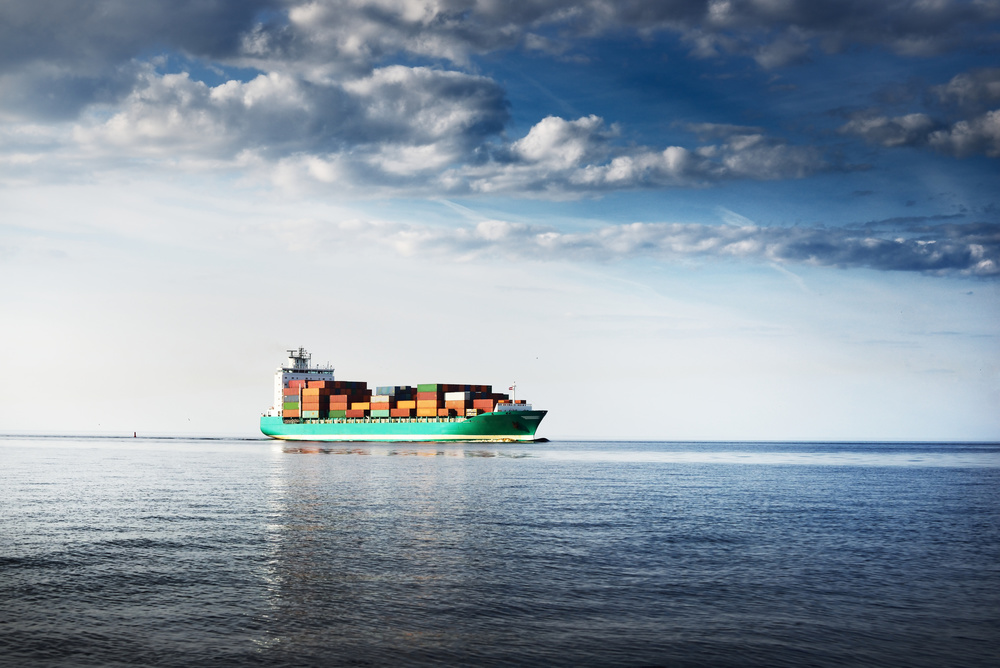
A December departure almost never makes a December 25 shelf date, and the time math should be done before booking. Even a West Coast FCL on the fast end needs 13–21 days on the water alone; after discharge it still clears customs, moves through terminal processing and reaches the receiver. LCL adds consolidation, deconsolidation and staging at both ends, and East Coast routing adds the canal leg on top. Cargo leaving after the early December sailings realistically reaches the United States in late December or January, not in time for Christmas weekend.
That does not make the December sailing pointless. The realistic jobs for a December departure are post-holiday replenishment, January and February stock builds, and goods that feed sales after the holiday reset. If the cargo has a fixed December shelf date, the decision belongs to an earlier sailing in the autumn peak; if the deadline is flexible, a December departure can still be a reasonable, lower-pressure move once the holiday rush has eased. Be honest with yourself about which deadline the shipment actually serves.
Space and surcharges in December
December rates carry the tail of the peak-season surcharge stack. On top of the base ocean rate expect a peak season surcharge (PSS) and possibly a general rate increase (GRI), alongside standing charges such as BAF, THC, ISPS and AMS filing fees. PSS commonly runs about $500 to $2,000 per container and GRI around $300 to $1,200 per box; both vary by carrier and sailing week. Ask for these line items itemised in your quote rather than folded into one headline number.
Space behaves the same way. The preferred sailing fills first, and a booking left until the last week can find the cheap rate gone and the next available vessel a week or two out. Book the sailing you actually need as a must-book, keep an earlier option in reserve, and re-confirm the schedule as the departure week approaches. For food and supplement cargo, the importer-side filings still apply: ISF must be filed 24 hours before the cargo is loaded on board, and FDA prior notice for ocean cargo is due at least 8 hours before arrival; these are the importer of record’s filings, coordinated with the forwarder.
Which routing fits a December shipment
For cargo bound for California, the Southwest or the Pacific Northwest, West Coast discharge keeps the ocean leg short and the final truck ride manageable. For the Northeast, Midwest or Southeast, an East Coast port such as NY/NJ or Savannah can save the long cross-country haul even though the water leg is longer. The delivery ZIP decides: a container discharged in Los Angeles still has a week or more of rail to Michigan, while one discharged in Savannah already sits in the Southeast. Compare the full journey time for your destination rather than the port-to-port number alone.
Perguntas frequentes
Can a December ocean shipment still arrive before Christmas?
Only on the earliest December West Coast sailings, and even then the margin is tight once clearance and final delivery are added. Most December departures arrive in late December or January and should be planned as post-holiday stock, not Christmas-week shelf inventory.
Is LCL slower than FCL in December?
LCL typically adds about 3–7 days on top of the FCL ocean range, and in a crowded month the shared container’s consolidation and deconsolidation windows can stretch further. FCL usually holds its schedule more reliably when terminals are busy.
What should I ask my forwarder to confirm for a December booking?
Ask for the scheduled transit on the specific sailing, the origin and destination cut-off dates, the itemised PSS, GRI and standing charges, and whether any vessel omissions are announced on that lane. Re-confirm the schedule again in the week before departure.
Leituras relacionadas
- Tempo de trânsito da China para os EUA, Costa Oeste e Costa Leste
- Opções de portos nos EUA para a importação de alimentos
- Sobretaxas e atrasos na época de pico do transporte marítimo
- Escolha entre LCL ou FCL
- Como comparar cotações de frete da China para os EUA
Planeie o seu envio
Comece por indicar os detalhes do seu produto e o código postal de entrega. Solicitar um orçamento de transporte.