
The US port you choose shapes transit time, cost and delivery options. This guide compares West Coast and East Coast gateways for food and supplement cargo from China.
West Coast ports
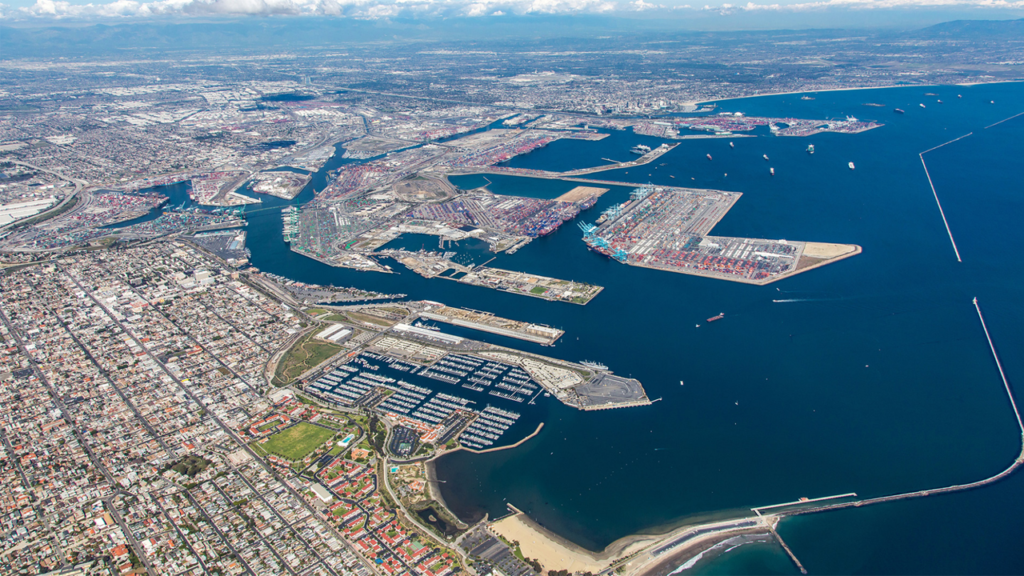
Los Angeles/Long Beach, together in San Pedro Bay, form the largest container gateway complex in the United States and the main entry point for China and Asia trade. The two ports combined handle roughly two-fifths of US waterborne container volume — about 20.1 million TEU in 2025 — which means dense weekly services and plenty of sailing choices from China. For cargo feeding the West Coast, the Southwest or the Pacific Northwest, this is the natural first look.
Oakland is the other meaningful West Coast option. It is the only deep-water container port in Northern California and serves Northern California, the Central Valley and western Nevada, handling roughly 2.25 million TEU in 2025. If your receiver sits in the northern part of the state or the inland West, routing to Oakland can shorten the drayage compared with hauling up from LA/Long Beach.
East Coast ports
New York/New Jersey is the largest East Coast gateway, moving on the order of 7–9 million TEU a year and radiating by road and rail across the Northeast and into the Midwest. Savannah is the fastest-growing East Coast gateway, home to one of the largest single container terminal facilities in North America and handling roughly 5–6 million TEU a year; its reach is the Southeast.
Routing to either East Coast port runs through the Panama Canal, which adds ocean time versus the West Coast — East Coast FCL transit of about 25–35 days against 13–21 days to LA/Long Beach. The case for the East Coast is not speed on the water; it is a shorter, cheaper final move once the container lands where your customer actually is.
| Gateway | Position | Roughly how it handles volume | Best for |
|---|---|---|---|
| LA / Long Beach | Largest US gateway complex (San Pedro Bay) | ~40% of US waterborne containers; ~20.1M TEU (2025) | West Coast, Southwest, Pacific Northwest |
| Oakland | Only deep-water container port in Northern California | ~2.25M TEU (2025) | Northern California, Central Valley, western Nevada |
| NY / NJ | Largest East Coast gateway | ~7–9M TEU/year; rail into the Midwest | Northeast and Midwest distribution |
| Savannah | Fastest-growing East Coast gateway | ~5–6M TEU/year; large single terminal | Southeast distribution |
Port choice and delivery ZIP
The port should match the receiving warehouse, not the other way around. A container that discharges in Los Angeles but feeds a New Jersey warehouse incurs a long and expensive domestic haul, while the same cargo routed into NY/NJ lands close to the door. Work backward from the delivery ZIP: where is the carton actually going to be received, and which gateway puts the shortest road or rail move on the other end?
Domestic transit from the gateway to the final ZIP is part of the planning, not an afterthought. Rail corridors give you a predictable mid-cost option for longer inland moves, while truck wins shorter distances and tighter scheduling. Confirm how your product and its delivery ZIP fit each gateway before you lock the routing.
How the port choice changes cost and time
Different gateways carry different ocean rates, destination charges and drayage. A lower ocean rate to the West Coast can be offset by a longer, costlier inland leg to an Eastern warehouse, just as a longer, pricier ocean leg to the East Coast can be offset by a short final delivery. Destination handling and deconsolidation also vary by terminal.
The right way to compare is like-for-like: ask each forwarder to quote the same product, volume, weight and delivery ZIP into each gateway, with ocean rate, destination charges and delivery itemised. That tells you the true landed cost for each port rather than a headline ocean number. Confirm the routing, transit and charges for your lane with your forwarder.
Frequently asked questions
Which port is best for my cargo?
It depends on the delivery ZIP, your volume and your schedule. A West Coast gateway usually wins for Western receivers, while NY/NJ or Savannah shortens the final move for Eastern and Midwestern ones. Compare quotes on the same assumptions — same product, volume, weight and ZIP — for each gateway before you decide.
Can I choose the port after booking?
The port is part of the routing decision, so confirm it at quote stage rather than after the booking is made. Changing the gateway later can alter the ocean rate, the inland move and the delivery plan. Tell the forwarder your delivery ZIP up front so the port choice is built into the first quote.
Related reading
- Choose LCL or FCL
- US warehouse delivery
- Costs and quote
- China to USA transit time
- How to compare China-to-USA freight quotes
Plan your shipment
Start with your product details and delivery ZIP code. Request a freight quote.