
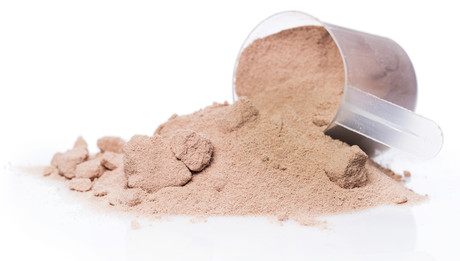
Caking is the single most common quality complaint on supplement powder shipments, and it almost always traces back to water, not to the powder itself. Whey, plant proteins, creatine blends and pre-workout mixes all flow freely on day one. What changes them on the water is humidity, temperature swings, and how well each package is sealed.
This guide explains why powder cakes, where the moisture enters, and the practical steps that keep a powder flowing when it reaches the US warehouse. It is a handling and packaging guide, not a chemistry lecture.
Why supplement powder cakes in the first place
Powder cakes because particles stick together after they absorb water. A fine protein or supplement powder has a huge surface area, so it takes on moisture quickly when it meets damp air. Once the surface of each particle softens slightly, neighbouring grains bond. Gentle vibration during the voyage packs the bed tighter, and over weeks the loose powder sets into lumps, then into hard blocks. Heat makes it worse: a warm container speeds up the water transfer, and a cold wall gives that water somewhere to condense.
The trigger is rarely one big splash. It is usually slow, invisible humidity creeping in through a weak seal. That is good news, because most of the fix is mechanical rather than expensive. Seal the package, block the moisture source, and the powder stays free-flowing.
| Cause | How it shows up | Practical fix |
|---|---|---|
| Humid packing air | Powder already clumpy at the factory | Conditioned packing area; run a sealed end-of-line check |
| Condensation in the container | Wet bottom layer, damp liners | Dry container, desiccant, liner bag |
| Temperature swings | Caking on the cooler walls of the load | Avoid open-dock exposure; keep covered |
| Torn or weak seals | Localised hard lumps near the opening | Heat-sealed inner bags, intact foil liners |

Where moisture actually enters a shipment
Think of moisture as entering from three sides.
First, the packing room itself. If the powder is filled on a humid day with no control, it already carries extra water before the box is even closed.
Second, the container. A standard dry container breathes through small temperature changes, and residual moisture can sit on the walls or floor.
Third, the handling chain: open docks, rain, and long outdoor waits let dampness in around the edges of the pallet.
The bottom of the load is usually the first to show the problem, because any condensation settles down. That is why bags on the floor or lowest layer are the ones receivers complain about, while the top layers look fine. Pallets, a dry container and good wrapping all push the risk back.
Desiccant, liners and sealing that hold
The protection system has three layers. An inner food-grade liner keeps the powder physically apart from the outside air. A desiccant sachet inside that liner soaks up the small amount of moisture that is sealed in with the product. A strong outer carton or woven bag protects those two from punctures. For retail jars, the equivalent of the liner is the foil induction seal under the cap; a missing or badly sealed foil is an open invitation to caking.
A few rules of thumb earn their cost. Desiccant belongs inside the sealed liner, not taped to the outside. Inner bags should be heat-sealed, not just folded, and checked for pinholes. Do not overfill bags, because a tight bulge splits and opens a path for air. When the powder is especially hygroscopic, ask the manufacturer what liner and desiccant combination they actually run, rather than selecting it yourself.
What to check when the cargo arrives
A quick arrival inspection catches caking while it is still a small problem. Look first at the lowest layer and the outer bags nearest the container walls, because those take the brunt of any condensation. Squeeze a sealed bag: a free-flowing powder gives and shifts; a caked one feels solid. Open one unit from the bottom layer and one from the top and compare. If only the bottom layer is affected, the cause was condensation during transit. If every layer is equally hard, the powder was likely packed with too much moisture to begin with. Photograph any damage, note the bag numbers, and tell your forwarder while the cargo is still at the warehouse.
Storing the received stock in a dry, covered warehouse keeps the remaining buffer intact. Do not leave pallets on an open dock through a humid week, and keep bags off the floor on pallets.
Frequently asked questions
Is caking normal for supplement powder?
Soft clumps that break up easily can happen, but hard, set lumps are a sign of moisture getting in. Well-sealed, dry powder should remain free-flowing through a normal ocean voyage.
Do I need a reefer container to stop caking?
No. Most supplement powder moves in a standard dry container. Sealing, desiccant and a dry container do most of the work; refrigeration is reserved for genuinely temperature-sensitive products.
Where does container condensation come from?
It comes from temperature change: warm, moist air cooling against the container walls. A dry container, a liner and desiccant manage it. Confirm your loading conditions with your forwarder.
Can caked powder still be sold?
That is a quality decision for your business, not a freight one. The goal here is to prevent it before the cargo reaches the warehouse.
Related reading
Plan your shipment
Start with your product details and delivery ZIP code. Request a freight quote.