
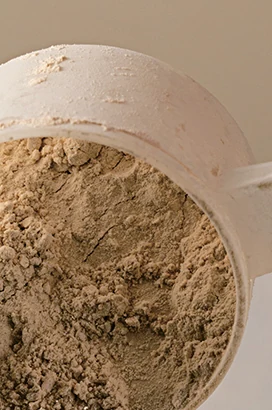
Describe the powder precisely before booking
“White powder” is not a usable freight description. State the product name, the ingredient list, the marketed use, the manufacturer and whether the stock is retail-ready or supplied in bulk. Share the complete label and specification where you have them.
A nutrition blend, a single dietary ingredient and a finished supplement can raise different questions. Your importer and a qualified adviser settle the classification; the freight plan follows that product review.
Share the label and the product spec sheet early, even if the art is not final. It lets the importer flag a missing statement or a dating problem before a full run is packed, when a fix is still cheap.
Give the finished pack and its outer dimensions. A sealed tub on a pallet, a stand-up pouch in a master carton and a bulk drum all charge differently on weight and volume, and the quote is only as good as the cargo description behind it.
Give us the numbers that drive the quote: carton count, outer dimensions, gross weight per carton, and whether the goods palletise or floor-load. LCL billing uses weight or volume, whichever is greater, and a minimum billable volume commonly applies. Send the finished, palletised dimensions rather than loose-cartons, so the quote survives booking.
Already moving dry beverages? See how we handle tea and coffee shipments, and for seasoning or condiment blends see ingredients & seasonings. Browse the full range on the product hub.
Seal out moisture and stop caking
Powders fail in transit one way above all others: they take on moisture and cake, clump or discolour. The fix starts with the supplier’s packaging. Review the pouch, liner or canister barrier and the closure method before anything reaches a container.
A poorly sealed pack leaks or breathes humidity during weeks on the water. Use a heat-sealed foil barrier where the formula is hygroscopic, and confirm the seal survives stacking pressure and pallet handling. Outer cartons should support the packs and protect lids and shakers from damage.
Food-safe desiccant sachets sized to the pack weight are standard practice for moisture-sensitive blends. Record the manufacturer’s humidity and temperature limits on the pack and on the shipping papers so the warehouse stores the goods correctly.
Fine powders also need dust and spill control. A split sack or torn liner in LCL deconsolidation creates a mess that delays your whole pallet. Ask the supplier for closure and drop-test evidence, and picture the load being handled several extra times.
Think in layers. The product meets an inner barrier, the barrier sits in a sealed carton, and the cartons stack on a shrink-wrapped pallet. If any one layer is weak, the whole chain fails. Bag-in-box, foil-lined drums and heat-sealed liners each solve a different leak path, so match the layer to the failure mode you are most worried about.
| Hazard | What goes wrong | Practical control |
|---|---|---|
| Moisture uptake | Caking, clumps, discolouration | Foil heat-seal, desiccant, sealed inner liner |
| Torn packs | Spillage, cross-contamination | Strong master carton, taped seams, inner bag |
| Heat / humidity | Shortened shelf life, aroma loss | Off-floor stowage, avoid wall condensation |
| Static & dust | Metered scoop packs leak | Sealed tubs, lid locks, dividers in carton |
| Compression | Packs crush, tubs buckle | Stack height limits, palletisation, corner protectors |
Retail packs versus bulk drums and sacks
The pack format drives everything from labelling to handling. Retail supplement packs and bulk ingredient drums are two different shipping problems.
| Aspect | Retail packs | Bulk drums / sacks |
|---|---|---|
| Packaging | Sealed tubs, pouches, jars with scoops | Fibre drums, liner bags, bulk sacks |
| Labelling | Finished label artwork, batch and expiry on pack | Specification, lot number, net weight on container |
| Handling | Protect lids, scoops and barcodes | Lifting points, drum strength, pallet load integrity |
| Warehouse receipt | SKU-level putaway, barcode scan | Lot reconciliation, repack or relabel if needed |
| Typical load | FCL for steady restocks, LCL for tests | FCL once volume justifies; LCL for smaller runs |
If repacking or relabelling happens in the US, agree who does it, where, and how it changes the final carton count and dimensions. A transport delivery and a sale-ready inventory receipt are not always the same event.
Before booking, confirm the pack-level handling points:
- Are every inner seal heat-tested and intact before palletisation?
- Are lids, shakers and scoops protected from stacking pressure?
- Are batch and expiry marks clear on both pack and master carton?
- Is the gross weight reconciled to the product quantity on the invoice?
Storage, stowage and load choice
Standard ocean freight is not temperature-controlled. Share the manufacturer’s humidity and temperature requirements up front. If those conditions are restrictive, review the route and equipment separately before dispatch.
Keep powder stock off the floor on pallets, away from container walls, and never co-load it with wet, leaking or strongly scented cargo. In LCL your cartons move through a destination deconsolidation warehouse, so the outer carton must survive extra handling.
Measure the finished cargo for the quote: carton count and dimensions, gross and net weights, pallet height and stackability, and the SKU and batch breakdown. A quote built on loose-carton size can shift after palletisation, so send the final pack format when you compare proposals.
Around 15 CBM is the common LCL-to-FCL starting point. Below it LCL is usually simpler; above it ask for both options, because destination LCL charges can add up. As a timing reference, China to the US West Coast is roughly 13–21 days port-to-port by FCL and 25–35 days to the US East Coast; LCL adds about 3–7 days. Confirm the current schedule with your forwarder.
Ask for surcharges itemised in writing. Fuel, terminal, security and peak-season charges shift by sailing week and carrier, so a rate that hides them can change later. Build a replenishment buffer that covers production readiness, sailing, customs release and destination receiving, and do not promise a retail launch date from a transit estimate alone.
Documents and import readiness
Reconcile the commercial invoice and packing list to the actual cargo. Product name, net weight, batch identifiers and quantities must match, so the importer and the receiving warehouse can both reconcile the load.
Powdered supplements travel under FDA import rules. FDA prior notice is due at least 8 hours before ocean arrival, and the Importer Security Filing (ISF) is due 24 hours before loading. The US importer of record owns these filings and FSVP; we coordinate the freight-side timing around them.
If you sell through Amazon, edible goods need clear expiry dating on both the product and the master carton, and the remaining shelf life must meet the platform’s policy. Plan the production and sailing schedule around that buffer, and check the current Seller Central policy for your category.
Ask the receiving warehouse about appointment rules, barcode requirements and shelf-life acceptance before the vessel sails. Build a replenishment buffer that covers production readiness, departure, customs release and destination receiving.
Give the destination ZIP code early. The truck, the appointment and the unloading equipment all depend on it, and a powder delivery that misses its appointment can sit on a dock for days. We match the origin pack-out to the receiving warehouse’s rules rather than forcing your stock through the wrong door.
Frequently asked questions
How do I stop supplement powder from caking during ocean freight?
Use a heat-sealed foil barrier, food-safe desiccant sized to the pack, and sealed outer cartons. Keep stock on pallets away from container walls and do not co-load with wet or humid cargo.
Should I ship powder as LCL or FCL?
Around 15 CBM is the common break point. Below that LCL is usually simpler; above it ask for both quotes, because destination LCL deconsolidation charges can add up. Compare door-to-door totals.
Who is responsible for FDA filings on supplement powder?
The US importer of record files FDA prior notice and handles FSVP. We coordinate freight documents and timing; the importer owns the regulatory filings.
Can I ship retail supplement tubs in the same container as other food?
Carefully. Strong-smelling or leaking cargo can affect sealed powder packs. Confirm co-loading compatibility at booking and keep powder on pallets away from moisture sources.
How long does China-to-USA ocean freight take for powders?
About 13–21 days to the US West Coast and 25–35 days to the US East Coast by FCL port-to-port. LCL adds about 3–7 days and door-to-door commonly runs 30–50 days. Confirm the current schedule.
Plan your powder shipment
Send us the product formula summary, the finished pack and carton dimensions, the pallet count and your delivery ZIP code. We will come back with a sealed-package freight plan, LCL or FCL. Request a freight quote.