
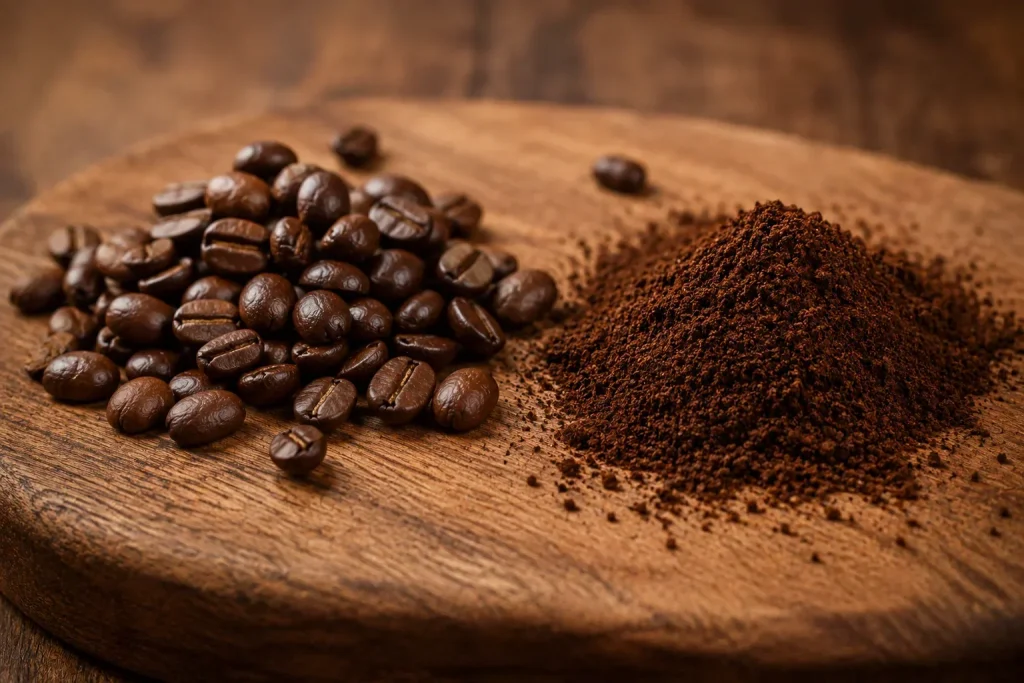
Roasted coffee does not go bad the way fresh milk does – it goes stale. And it loses freshness at very different speeds depending on whether you ship whole beans or pre-ground coffee. That difference changes the packaging, the seal, whether you need a degassing valve, and how long you can expect the product to hold up on a China-to-USA ocean leg.
This guide compares the two forms on the operational side: what the packer should do, what the warehouse should watch, and how to plan shelf life around a voyage of about 13-21 days to the West Coast or 25-35 days to the East Coast.
Why beans and ground age differently
Coffee flavour lives in aromatic oils trapped inside the bean. Two things attack those oils: oxygen and moisture. Whole beans keep those oils sealed inside thousands of cell walls, so they oxidise slowly. Grinding shatters the bean and exposes the oils to air across a huge new surface area – ground coffee stales in days what whole beans would lose over weeks. Freshly roasted beans also release carbon dioxide for days after roasting, which is why a completely airtight bag straight off the roaster can swell. A packer who understands both facts will choose the bag differently for beans and for grounds.
Beans vs ground at a glance
| Factor | Whole roasted beans | Ground coffee |
|---|---|---|
| Oxidation sensitivity | Slower, protected by cell walls | High, large exposed surface area |
| Gas release | Releases CO2 for days after roast | Minimal outgassing |
| Packing pressure | Pressure build-up must be handled | Needs a strong oxygen barrier |
| Typical bag | Foil bag with one-way degassing valve | Sealed foil bag, valve optional |
| Shelf-life posture | Longer, planned around restock timing | Shorter, sell-through buffer matters |
Note the word typical – the exact shelf life is set by the roaster and the printed label, not by the freight. Use the product’s own best-by date to plan replenishment, and confirm the roasting date before dispatch so you know how much shelf life crosses the ocean.
Packaging formats for ocean freight
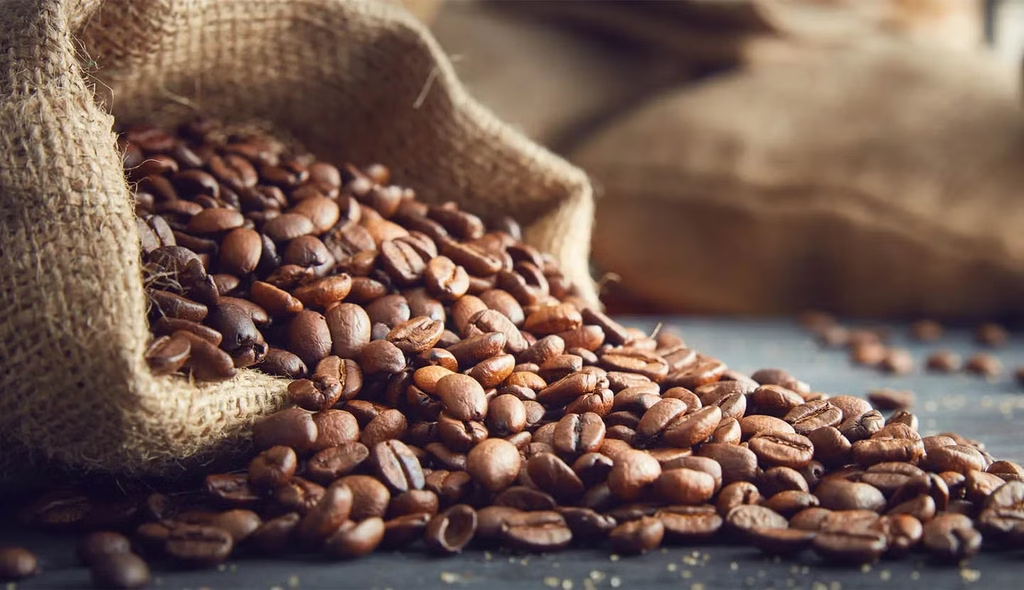
The standard export choice for roasted beans is a foil or metallised stand-up bag with a one-way degassing valve. The valve lets post-roast carbon dioxide escape without letting oxygen back in, and it protects the bag from swelling on the voyage. A resealable zip on the bag is a bonus for the end customer but does not replace the foil barrier. For ground coffee, the valve matters less because there is little gas to release; the priority is a complete, strong seal with minimum headspace. Vacuum packing is a common question, but it is usually wrong for fresh whole beans – crushing them under vacuum bursts cells and speeds staling, and it fights the outgassing the valve was designed for. Ask the roaster which format the export stock was actually packed in before you quote the freight.
Roast level and shelf-life notes
Darker roasts develop surface oils that can look glossy and smell stronger; lighter roasts keep more acidity and floral notes that fade fastest with air. Neither changes the freight rules, but both change how quickly a weak seal becomes a visible quality problem. The operational fix is the same: sealed foil bags, taped outer cartons, palletised loads, and a dry, covered storage room at origin.
Build the transit into the plan rather than after it: West Coast FCL is roughly 13-21 days port-to-port, East Coast about 25-35, and LCL adds about 3-7 days at each end. Confirm the current sailing schedule with your forwarder for the week you book, and order ground coffee in smaller, faster-moving batches so it reaches the shelf with useful life left.
Storage from origin to US warehouse
Beans and grounds both want the same warehouse conditions: dry, cool, dark and away from strong smells. Coffee picks up odour readily, so keep it apart from flavoured teas, spices and chemicals in shared storage. At destination, the receiving warehouse should move the cartons into a dry room rather than leave them on a hot dock. If your US receiver is a fulfilment-channel customer, check the current channel policy for expiry dating on packaging before dispatch – label and case-mark rules are set by that channel, not by the forwarder.
Frequently asked questions
Do roasted beans need a degassing valve on the ocean voyage?
Valve bags are the standard export pack for freshly roasted beans because post-roast CO2 has to escape without oxygen returning. Confirm the roast date; very rested beans outgas less, but the foil barrier still matters.
Can I vacuum pack ground coffee for shipping?
Ground coffee benefits from a strong, low-headspace foil seal. Full vacuum is more often a mistake for whole beans; your packer’s standard export format is the safest default.
How long does a China-to-USA ocean voyage take for coffee?
Roughly 13-21 days to the US West Coast and 25-35 days to the East Coast for FCL, with LCL adding about 3-7 days at each end. Confirm the current schedule with your forwarder for your sailing week.
Related reading
Plan your shipment
Start with your product details and delivery ZIP code. Request a freight quote.