

LCL pricing starts with volume. Understanding CBM and chargeable weight helps you prepare the right information and compare quotes on the same basis.
What CBM means
CBM stands for cubic metre, and it is the volume your cargo occupies. You calculate it from the outer dimensions of each carton — length, width and height in metres — multiply them together, then add the result across all cartons. A carton measuring 0.4 m by 0.3 m by 0.25 m works out to 0.03 CBM, and 100 such cartons give 3.0 CBM.
Palletised cargo is measured the same way at the outer footprint. If cartons are stacked on pallets, you measure the whole pallet — its length, width and the height of the loaded pallet — not the loose carton inside. Add a little for overhang if the cartons sit wider than the pallet deck. The aim is the occupied space the forwarder has to fit in a shared container, and getting that number right is what makes every downstream quote actually comparable.
Chargeable weight rules
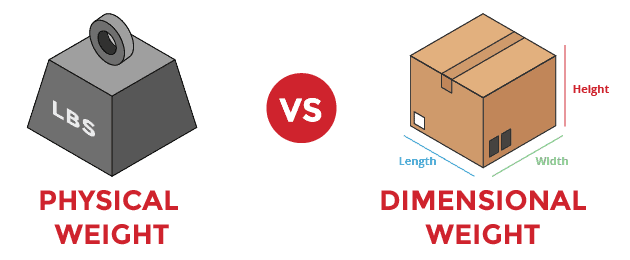
LCL freight is charged on a weight-or-measurement basis, written as W/M. The chargeable unit is the larger of your total volume in CBM or your total weight in metric tonnes. Carriers work to the ratio of 1 CBM = 1,000 kg (one tonne), and bill whichever figure is bigger.
That means light, bulky cartons — think bottles of supplements or empty packaging — are charged by volume, because the CBM number exceeds the weight. Dense cargo where a cubic metre weighs more than about one tonne is charged by weight instead, even though it looks compact. A minimum billable volume, commonly 1 CBM, also applies, so a small shipment below that is still billed as 1 CBM; confirm the exact minimum with your forwarder.
| Situation | How it is charged | Why |
|---|---|---|
| Light, bulky cargo (e.g. bottled supplements) | By volume (CBM) | CBM exceeds weight at 1 CBM = 1,000 kg |
| Dense, heavy cargo (>~1 tonne per CBM) | By weight (metric tonnes) | Weight exceeds the volume figure under W/M |
| Shipment below the minimum | Billed as a minimum (commonly 1 CBM) | LCL minimum billable volume applies; confirm with your forwarder |
| Around the LCL/FCL crossover (~15 CBM) | Get both quotes | FCL is usually cheaper per CBM above this point |
Measuring your cartons
Measure the actual outer dimensions, not the nominal size printed on the artwork. Bulging corners, foam inserts and over-filled cartons all add a centimetre or two, and those centimetres compound across a pallet. Use the closed, packed carton as it will ship, with tape and any protective edges in place.
For each enquiry, give the carton count, the dimensions of a representative carton, the gross weight per carton and the product value. If cartons come in two or three sizes, list each size separately. That lets the forwarder total the CBM and weight and apply the W/M rule on numbers that match reality, rather than estimates.
Why quotes differ
Quotes diverge because the measurement assumptions differ. One forwarder measures the packed pallet, another the empty carton; one applies the 1 CBM minimum, another starts billing from zero. Small differences in assumed volume and weight move the chargeable figure — and the price — noticeably.
The fix is to send the same inputs to every forwarder: identical product, carton count, outer dimensions, gross weight and delivery ZIP. Ask each to state the chargeable volume they used and what is included. Around 15 CBM is the rough crossover where FCL usually becomes cheaper per cubic metre, so request both LCL and FCL quotes near that point for your lane. Once the chargeable figure is settled, the remaining comparison is the usual one: which destination and deconsolidation charges sit inside the price, and which turn up as extra invoices when the cartons reach the warehouse.
Frequently asked questions
What is a typical CBM breakpoint for FCL?
FCL usually becomes the cheaper option per cubic metre above roughly 15 CBM, though the practical crossover can fall between about 12 and 18 CBM depending on the lane and local charges. Request both an LCL and an FCL quote near that volume, because destination LCL charges can add up. Confirm the breakpoint with your forwarder.
Do all forwarders charge the same way?
No. They all apply the same W/M principle and the 1 CBM = 1,000 kg ratio, but measurement assumptions, minimum billable volumes and included charges differ. Ask each forwarder to state the chargeable volume they used and which charges are included, so you compare on the same numbers rather than headline rates.
Related reading
- Costs and quote
- Choose LCL or FCL
- Request a quote
- How to compare China-to-USA freight quotes
- How to choose a China-to-USA freight forwarder
Plan your shipment
Start with your product details and delivery ZIP code. Request a freight quote.