

Bulk ingredients move differently from finished goods. This brief covers the freight plan for raw and semi-processed supplement ingredients from China to US manufacturing partners.
Finished product vs ingredient
Bulk ingredients move differently from finished goods, and the first decision is what the cargo actually is. Ingredient form matters: a powder, a granule, an extract or a pre-mix each has its own packaging and weight profile. The second question is whether the cargo is bound for further manufacturing, processing or repackaging at the US end, because that changes the documentation and the receiving conversation.
Finished supplements arrive labelled and consumer-ready; bulk ingredients arrive for a US manufacturing partner to blend, encapsulate or bottle. That distinction affects everything from the certificates that travel with the shipment to how the receiving facility expects to unload it.
It also shapes the conversation with your carrier. A finished supplement shipment is planned around retail-ready cartons and a consumer label; an ingredient shipment is planned around a receiving dock, bulk packaging and the manufacturer’s own QC checks. We plan the freight to match the receiving operation, rather than forcing ingredient cargo through a finished-product playbook.
Records and specifications
Specifications and certificates accompany the shipment, because the receiving manufacturer needs to verify what they are taking delivery of. We do not determine those specifications; the importer and the receiving manufacturer own them. What we do is make sure the documentation travels cleanly with the cargo.
Facility registration and importer arrangements sit with the US importer of record, who also carries the FSVP obligations. Per-shipment filings such as prior notice and entry are coordinated with the importer and broker. For ocean cargo, prior notice is submitted at least 8 hours before arrival and the ISF 24 hours before the cargo is laden; confirm the exact timing with your importer and broker.
Because the receiving manufacturer may run its own incoming inspection, the documentation that travels with the cargo is not optional. We make sure certificates and specs are handed over with the shipment so the receiver can verify delivery against the purchase order without chasing missing paperwork weeks later.
Storage and packaging
Bulk ingredients need sealed, food-grade packaging with moisture control. Powders and extracts absorb moisture quickly, so the inner packaging and the outer cartons both matter. Carton and pallet planning follows the weight profile: dense ingredient cartons can tip LCL billing into weight-based charges, because LCL chargeable volume is set at the greater of total CBM or total weight tonnes, commonly 1 CBM treated as 1,000 kg.
Freight and delivery
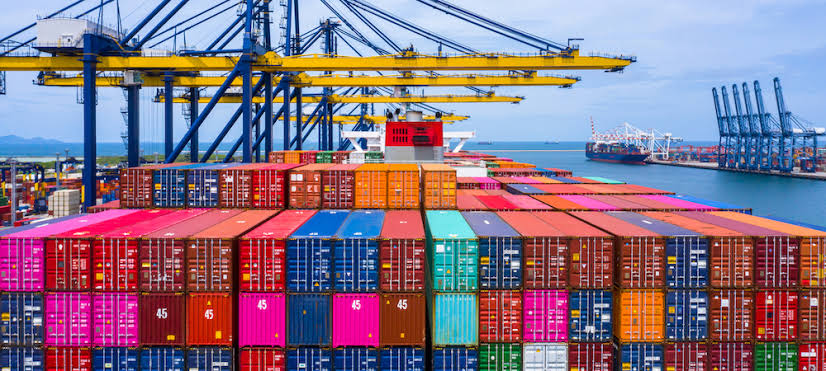
LCL vs FCL is decided by volume and weight. Bulk ingredient programmes are often large enough to justify FCL, which lowers the per-unit freight cost; around 15 CBM is the starting point for comparing the two, with a 20ft container carrying roughly 12–16 CBM and a 40ft container roughly 22–28 CBM as a breakeven reference. Delivery is planned to the US manufacturing facility by ZIP, with the receiver’s unloading and dock requirements confirmed before the cargo lands.
Bulk programmes are also where the door-to-door lead time matters most. To the US West Coast, port-to-port FCL transit is commonly around 13–21 days and to the US East Coast around 25–35 days, with LCL adding roughly 3–7 days; build that into the manufacturer’s production schedule and confirm the current sailing week with your forwarder.
| Finished supplement | Bulk ingredient | |
|---|---|---|
| End use | Consumer-ready, labelled | Further manufacturing / repackaging |
| Documentation | Finished label, Supplement Facts | Specifications and certificates for the manufacturer |
| Packaging | Retail bottles / blister, cartoned | Sealed food-grade bulk bags, moisture control |
| Freight billing | Often lighter per carton | Dense; weight-based LCL charges likely above ~1 tonne/CBM |
Frequently asked questions
Do ingredients need the same filings as finished supplements?
The filings and obligations are set by the importer and the receiving manufacturer, not by us. Coordinate the specifications, FSVP and per-shipment filings before booking, because ingredient cargo carries documentation that finished product does not. The forwarder coordinates the freight-side timing with the importer and broker.
Is bulk cargo cheaper per unit?
Larger volumes generally improve the per-unit freight cost, which is why bulk ingredient programmes often justify FCL. Compare FCL against LCL above roughly 15 CBM, and remember dense cargo can be charged on weight rather than volume in LCL. Request both quotes for your lane rather than relying on a fixed threshold.
Related reading
- Ingredients product page
- Supplement shipping services
- Costs and quote
- Tablets & capsules shipping (China to USA)
- LCL CBM and chargeable weight
Plan your shipment
Start with your product details and delivery ZIP code. Request a freight quote.