

Tea and coffee are usually straightforward cargo once they are on the water. What actually delays a shipment is rarely the product – it is the paperwork. A missing invoice line, an ISF filed late, or a prior notice that is not ready when the vessel arrives can turn a clean voyage into extra days at the port. The fix is to assemble the document pack before dispatch, and to know who files what and when.
This guide is the operational checklist for shipping tea and coffee from China to the USA: the core documents, the filing deadlines, and where the importer’s responsibility begins.
The core document pack
Three documents travel with every commercial import, and they have to agree with each other. The commercial invoice lists the seller, buyer, product description, quantity, unit price and total value. The packing list breaks the shipment into cartons: how many cartons, dimensions, gross and net weight. The bill of lading is the carrier’s receipt for the cargo and the title document used at release. Mismatched quantities between the invoice and the packing list, or a product description that does not match the goods, are the most common avoidable causes of questions at the border. Get these three aligned before the cargo is stuffed into the container.
| Document | What it proves | When it is needed |
|---|---|---|
| Commercial invoice | Value, buyer, seller, product | Before entry filing |
| Packing list | Carton count, dimensions, weights | Before booking and entry |
| Bill of lading | Carrier receipt and title | Issued at loading, used at release |
| ISF filing | Cargo security data | Before the cargo is loaded on board |
| FDA prior notice | Food arrival notification | Before the cargo arrives in port |
Filing timelines that drive the plan
Two deadlines do most of the scheduling work, and both run on the vessel’s clock. The Importer Security Filing (ISF, also called 10+2) must be submitted no later than 24 hours before the cargo is loaded on board the vessel at the overseas port – that makes it an origin-window task, not a destination one. The FDA prior notice for food must be submitted at least 8 hours before the cargo arrives at the US port when it moves by ocean. Filing either one late is a classic cause of delay, so the importer and forwarder should agree early who submits which, and on what day relative to the sailing. Confirm the exact timing and the filing channel with your importer or customs broker for your lane.
Importer responsibility, and where the forwarder fits
FDA filings and the Foreign Supplier Verification Program (FSVP) sit with the US importer of record – the US owner or consignee, not the Chinese factory and not the forwarder. FSVP means the importer maintains verification for each foreign supplier, and food and supplement imports fall under that framework. The forwarder’s role is the freight side: booking the ocean leg, coordinating the shipping documents, and handing the importer and broker a complete pack so filings go in on time. If the cargo is destined for a fulfilment channel, also confirm the product and expiry-label requirements with that channel before dispatch.
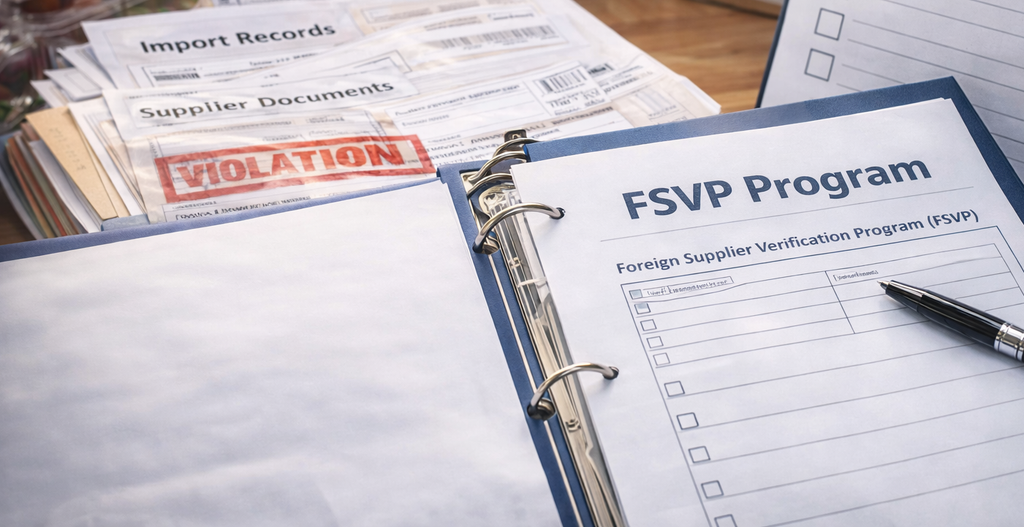
Pre-dispatch checklist
Before the container is packed, run a short list: the commercial invoice, packing list and bill of lading data all match; product description and quantities are consistent; the importer of record is named and ready; ISF timing relative to loading is agreed; prior notice timing relative to arrival is agreed; and the finished packaging meets the destination channel’s label expectations. Build in the voyage time as well – roughly 13-21 days to the US West Coast and 25-35 days to the East Coast for FCL, with LCL adding about 3-7 days at each end – and confirm the current schedule with your forwarder. If any line looks incomplete at the dock, fix it before loading rather than chasing it by email while the vessel is at sea. A clean document pack is what lets all that sailing time count for the business instead of for port waiting time.
Frequently asked questions
Who files the ISF?
The ISF is the importer-side security filing, commonly submitted by the importer or their broker. Agree early who submits it and on what day – the deadline is 24 hours before loading on board.
How early does FDA prior notice need to go in?
For ocean cargo, at least 8 hours before the shipment arrives at the US port. Confirm the exact channel and timing with your importer or broker.
Does the forwarder handle FSVP?
No. FSVP is the US importer of record’s responsibility. The forwarder coordinates the freight documents and filings around it, but the importer owns the compliance obligation.
Related reading
Plan your shipment
Start with your product details and delivery ZIP code. Request a freight quote.